
Last updated: 25 October 2026 · Licences, insurance statements, audit reports, prices and plan limits rechecked on every vendor’s own pages on 25 October 2026
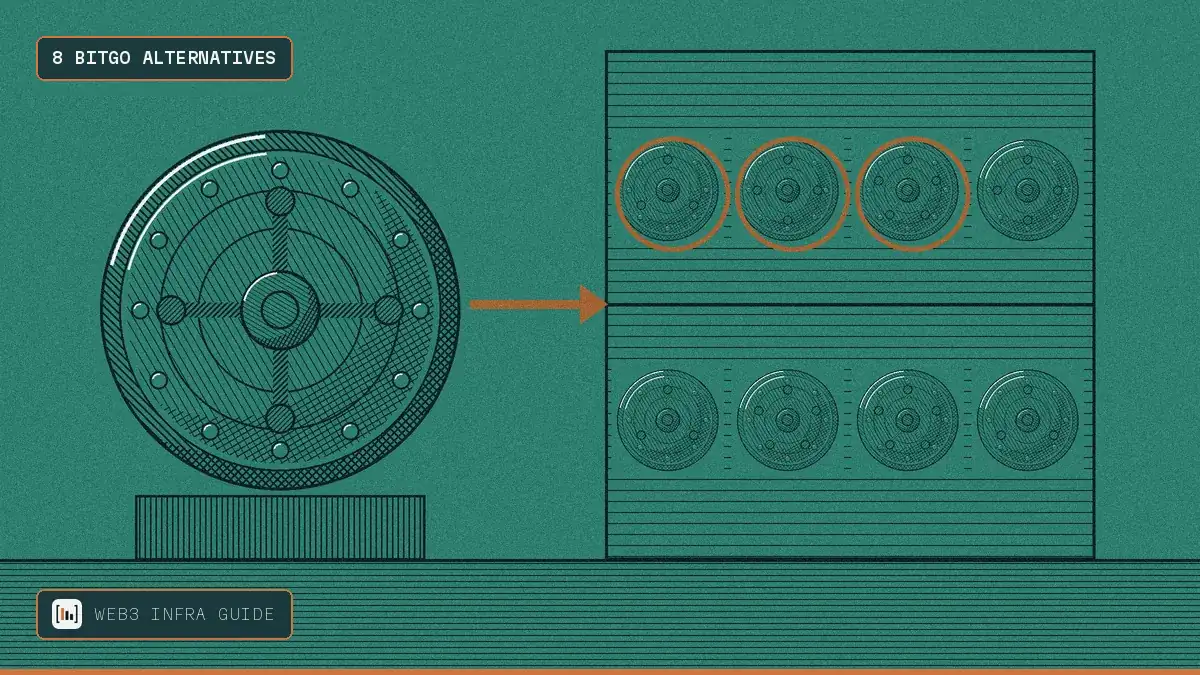
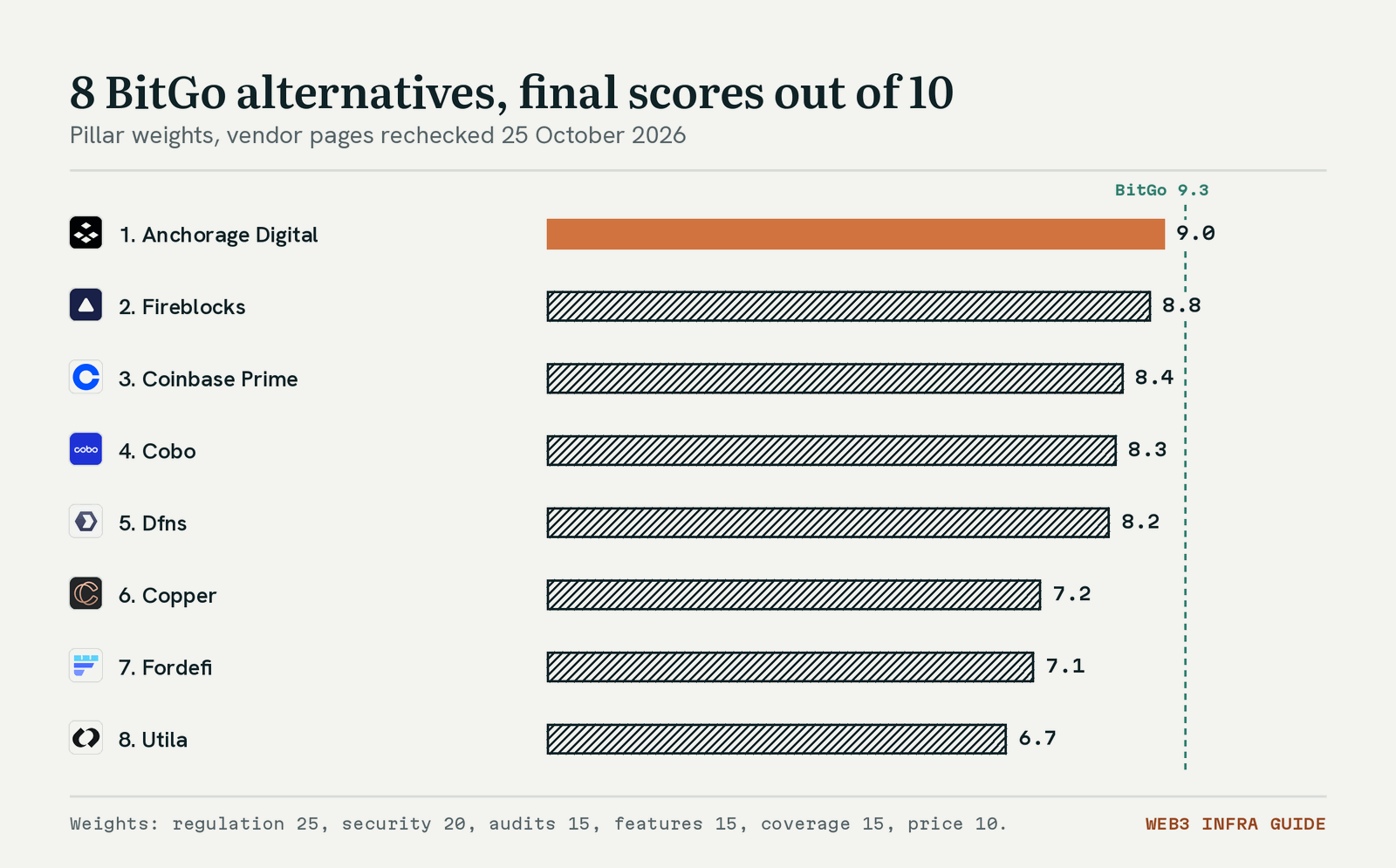
The best BitGo alternatives in 2026 are Anchorage Digital and Coinbase Prime if you need another qualified custodian, Fireblocks if you want MPC wallet infrastructure with a trust company option, and Cobo or Dfns if you want self-custody software with a public price list. We scored eight alternatives on the same six weighted criteria we use across our digital asset custody hub, scored BitGo itself as the benchmark at 9.3, and turned each vendor’s published price into a cost you can compare with a custody quote.
Teams usually leave BitGo for one of three reasons: they want a second custodian so no single provider holds everything, BitGo’s custody fees are quoted privately in basis points and are hard to benchmark, or they have outgrown free self-custody and need a policy engine with published plans. Each reason points to a different shortlist, so we split the field before ranking it. Scoring rules are on our methodology page.
TL;DR
- Ranking: Anchorage Digital 9.0, Fireblocks 8.8, Coinbase Prime 8.4, Cobo 8.3, Dfns 8.2, Copper 7.2, Fordefi 7.1 and Utila 6.7. BitGo scores 9.3 on the same rubric, so no alternative beats it overall.
- Anchorage Digital is the closest like-for-like swap: an OCC chartered bank with SOC 1 and SOC 2 Type II controls, plus Porto self-custody from $750 a month.
- BitGo publishes how it bills (basis points on the hourly-averaged USD balance and on outgoing sends) but not its rates. Anchorage Digital’s Porto and Fireblocks publish numbers you can compare against a BitGo quote.
- Porto Advanced costs $15,300 a year for balances under $10M. Against a 30 bps custody quote it is cheaper above a $5.1M balance, and against 20 bps above $7.65M.
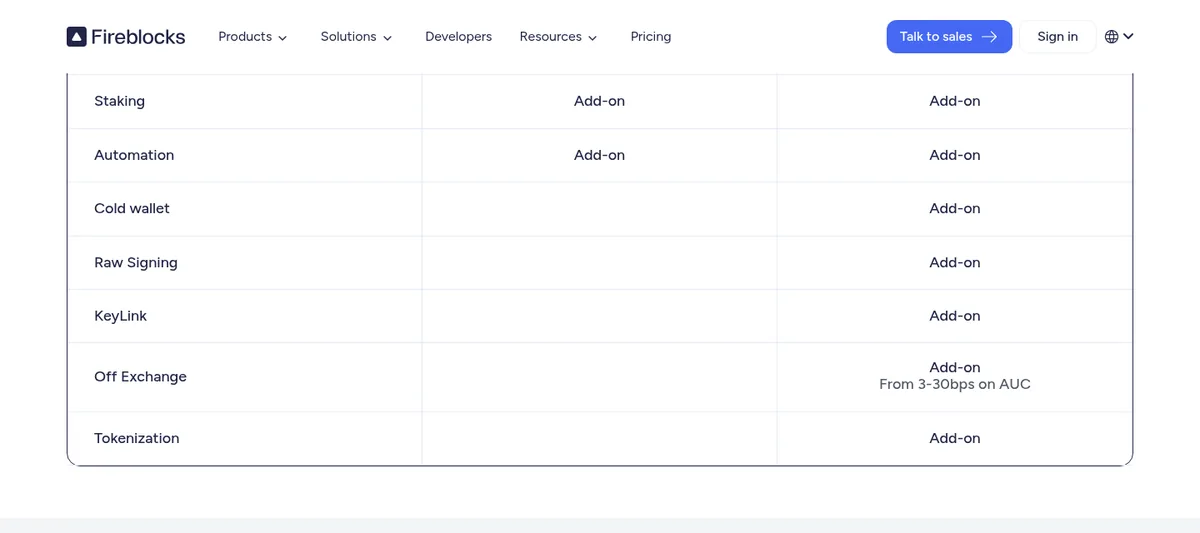
- Fireblocks lists its Off Exchange add-on at 3 to 30 bps on assets under custody, the only basis-point rate any vendor here publishes.
- Stated insurance amounts: Copper $500M through Aon in the Lloyd’s market, against BitGo’s up to $250M. No other alternative states a limit.
The Decision Kernel
First decide what BitGo does for you today. BitGo is both a qualified custodian and a self-custody wallet vendor, so the right alternative depends on which half you are replacing.
- You need another qualified custodian: shortlist Anchorage Digital and Coinbase Prime. Both run a chartered trust entity, publish SOC 1 and SOC 2 Type II reports and add staking and trading.
- You want MPC wallet infrastructure instead of multisig custody: shortlist Fireblocks, and Cobo or Utila if price matters more than breadth.
- You run many wallets or high volume: shortlist Dfns. Its plans are flat annual fees by wallets and signatures, with no volume or AUM charges.
- You trade across many venues: shortlist Copper for ClearLoop off-exchange settlement and $500M of stated insurance, or Fordefi if most activity is DeFi and you want Paxos qualified custody inside the wallet.
Verdict: Pick Anchorage Digital if you need a second chartered custodian. Pick Fireblocks if you are moving from BitGo multisig to MPC, and Cobo or Dfns if a published price list is the main requirement.
How We Scored the Alternatives
We scored each vendor from 1 to 5 on six weighted criteria and doubled the weighted sum to give a score out of 10, using vendor pages read on 25 October 2026. Facts missing from the vendor site scored as not disclosed. The weights are the same ones every custody ranking on this site uses, and the full rules are on our methodology page and our editorial policy.
- Regulation and segregation, 25%: the charter or licence of the entity that holds assets, and qualified custodian status. Pure software vendors score 2.
- Security and key control, 20%: MPC, multisig or HSM design, policy engines, device binding and recovery.
- Audits and insurance disclosure, 15%: 5 for SOC 2 Type II plus ISO 27001 plus a stated insurance amount or another third-party certification, 4 for SOC Type II reports with ISO 27001 or stated insurance, 3 for SOC 2 Type II only.
- Features, 15%: staking, trading, off-exchange settlement, DeFi access, wallet types and APIs.
- Coverage, 15%: stated chains and assets.
- Pricing transparency, 10%: 5 for a full public price list with limits and overage, 4 for a public entry price with custom tiers above, 3 for a public price on a secondary product or a free tier, 2 for a billing method only, 1 for nothing.
| Vendor | Regulation (25%) | Security (20%) | Audits (15%) | Features (15%) | Coverage (15%) | Pricing (10%) | Score |
|---|---|---|---|---|---|---|---|
 | 5 | 5 | 4 | 5 | 4 | 3 | 9.0 |
 | 3 | 5 | 5 | 5 | 5 | 4 | 8.8 |
 | 4 | 5 | 4 | 5 | 5 | 1 | 8.4 |
 | 3 | 4 | 4 | 5 | 5 | 5 | 8.3 |
 | 2 | 5 | 5 | 5 | 4 | 5 | 8.2 |
 | 3 | 4 | 5 | 5 | 3 | 1 | 7.2 |
 | 2 | 5 | 3 | 5 | 5 | 1 | 7.1 |
 | 2 | 4 | 3 | 4 | 4 | 4 | 6.7 |
 | 5 | 5 | 4 | 5 | 5 | 3 | 9.3 |
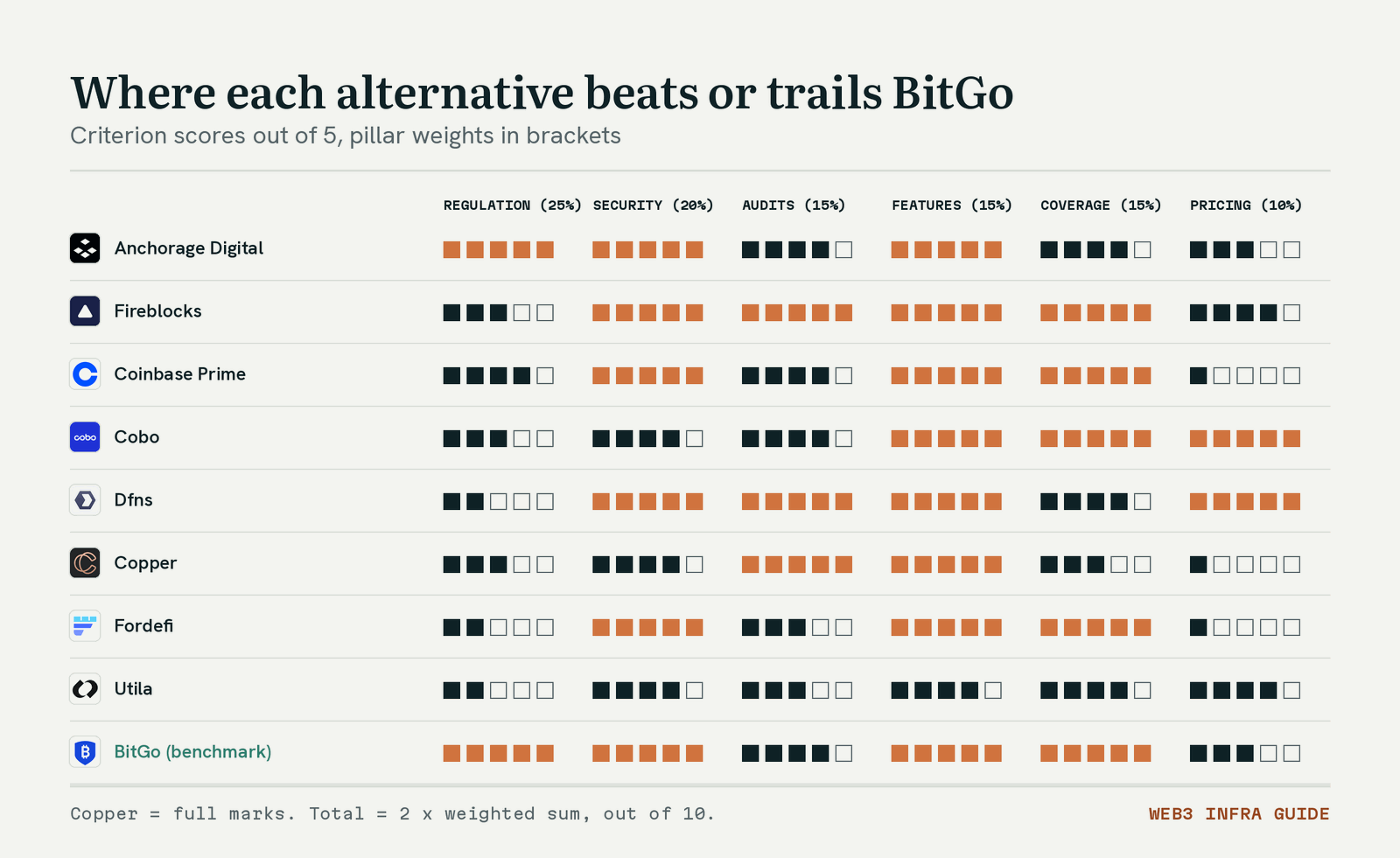
The grid explains why nothing tops BitGo. BitGo scores 5 on regulation, security, features and coverage, so an alternative can only tie it there. Anchorage Digital ties on everything except coverage. Fireblocks beats BitGo on audits and pricing transparency but gives up 2 points on regulation, which at a 25% weight costs a full point.
Cobo and Dfns are the only vendors with a full public price list.
BitGo Alternatives at a Glance
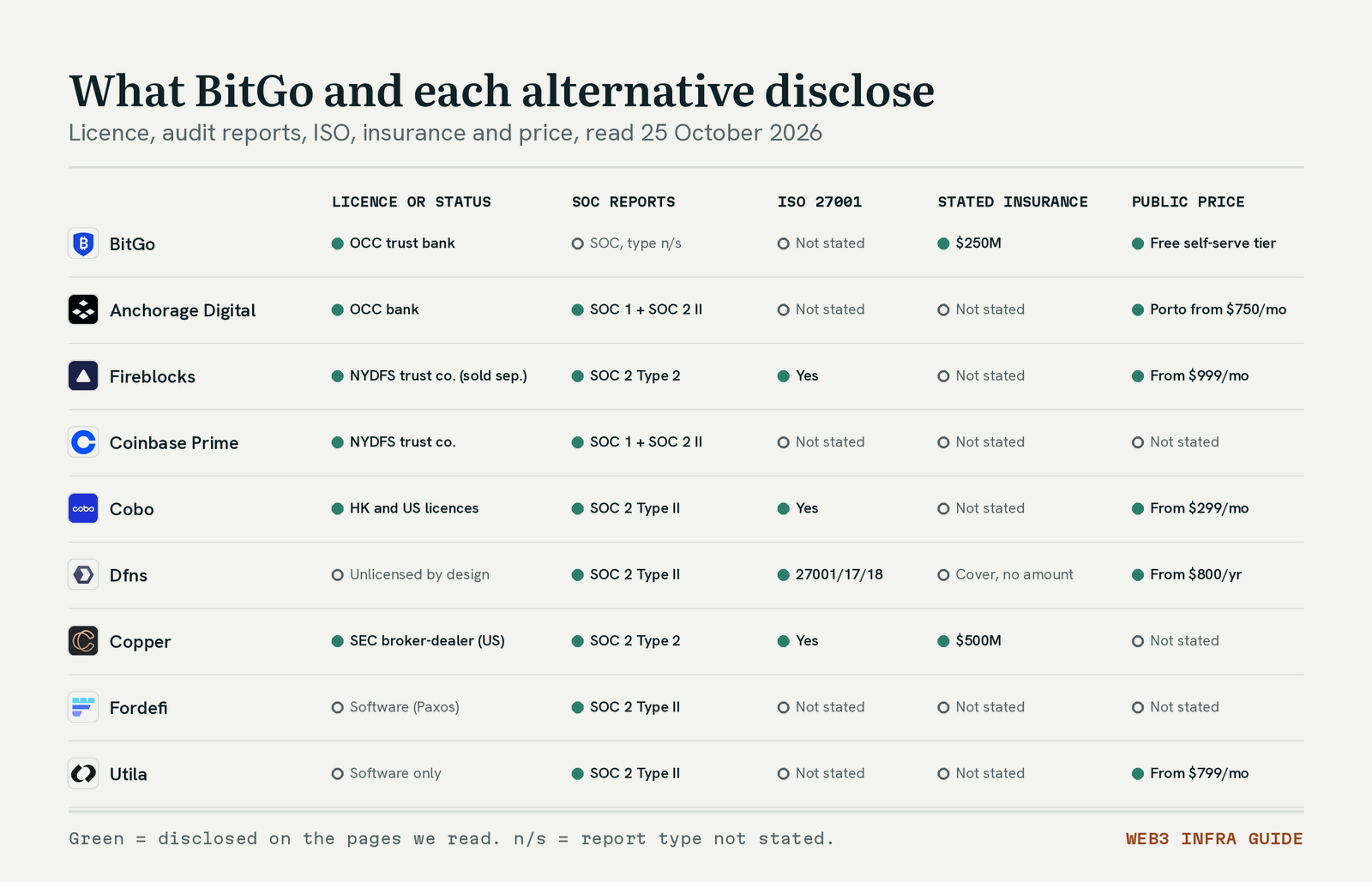
This table puts the facts a due diligence questionnaire asks for in one place, using only what each vendor states on its own site. Three of the eight publish no price at all, so expect a sales process with Coinbase Prime, Copper and Fordefi.
| Vendor | Model | Entity or status | Audits named | Chains or assets | Public entry price |
|---|---|---|---|---|---|
| Qualified custody plus self-custody wallets | BitGo Bank & Trust, N.A. (OCC national trust bank) | SOC attestations, type not stated | 1,700+ assets | Free self-service tier |
| Bank custody plus Porto self-custody | Anchorage Digital Bank N.A. (OCC) | SOC 1 and SOC 2 Type II | About 780 assets | Porto from $750 a month |
| MPC wallet platform plus trust company | Fireblocks Trust Company (NYDFS), sold separately | SOC 2 Type 2, ISO 27001, CCSS QSP Level 3 | 80+ chains | $999 a month |
| Custody, trading, financing, staking | Coinbase Custody Trust Company (NY fiduciary) | SOC 1 Type II and SOC 2 Type II | 470+ assets | Not published |
| Custodial, MPC, smart contract and exchange wallets | Licensed in Hong Kong and the US | SOC 2 Type II, ISO 27001 | 80+ chains, 3,000+ tokens | $299 a month |
| Wallet infrastructure, SaaS or on-premises | Deliberately unlicensed | SOC 2 Type II (Deloitte), ISO 27001, 27017, 27018 | 100+ blockchains | $800 a year |
| Custody, ClearLoop settlement, collateral | Copper Markets (US), Inc., SEC broker-dealer | SOC 2 Type 2, ISO 27001 | Not stated | Not published |
| MPC wallet and DeFi gateway | Software, owned by Paxos | SOC 2 Type II (EY) | EVM, SVM, Cosmos, UTXO and more | Not published |
| MPC wallet platform | Software, two-party MPC | SOC 2 Type II | 100+ blockchains | $799 a month |
How BitGo Bills, and How to Compare a Quote
BitGo is one of the few custodians that publishes its billing methodology, even though it does not publish its rates. Knowing how BitGo meters custody lets you turn any alternative price into the same unit before you negotiate.
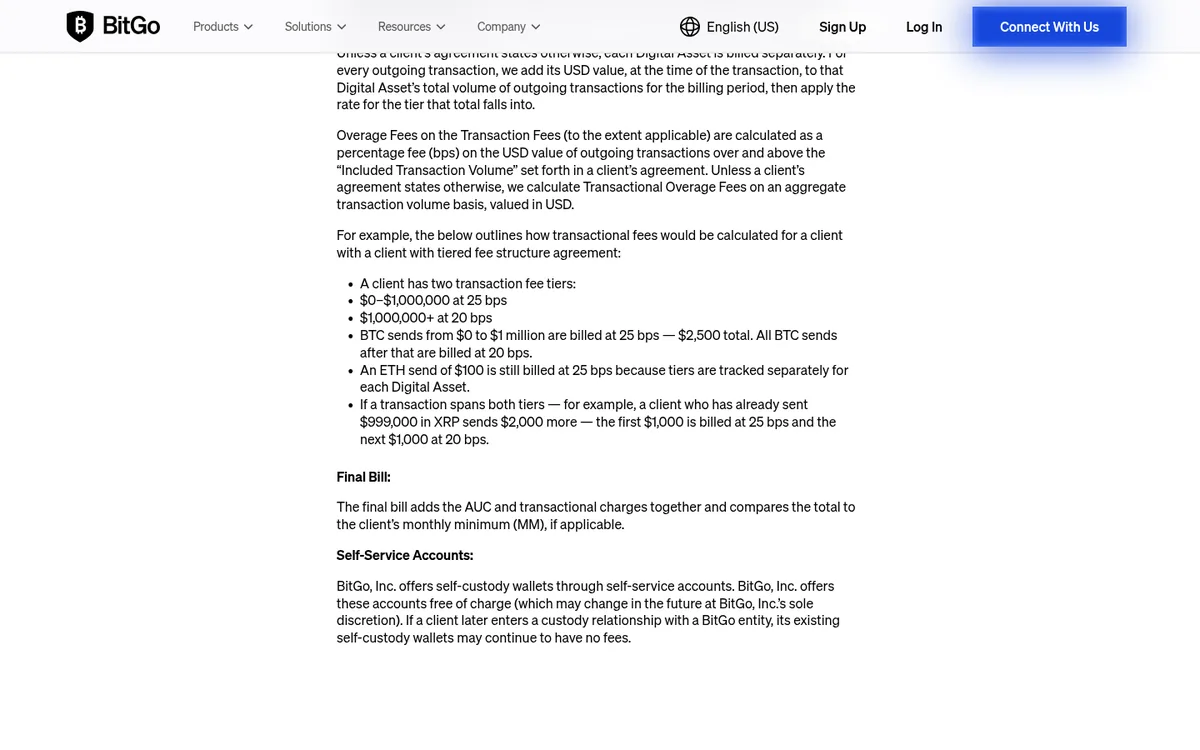
- Custody fee: basis points on the average USD value of assets under custody over the month, computed from hourly balances and billed per digital asset, so the fee moves with prices even when your holdings do not.
- Transaction fee: basis points on the USD value of outgoing sends to addresses outside your BitGo enterprise. Internal transfers are not charged.
- Tiers: tracked separately for each asset. BitGo’s own worked example bills BTC sends at 25 bps up to $1M and 20 bps above, so $1.5M of BTC sends costs $2,500 plus $1,000, or $3,500. The rates are an illustration on BitGo’s page, not a price list.
- Self-custody: BitGo, Inc. offers self-service self-custody accounts free of charge and says that may change.
Two alternatives publish numbers you can line up against a BitGo quote. Anchorage Digital prices Porto self-custody as a flat fee by monthly average balance, and Fireblocks lists a basis-point range for one add-on.
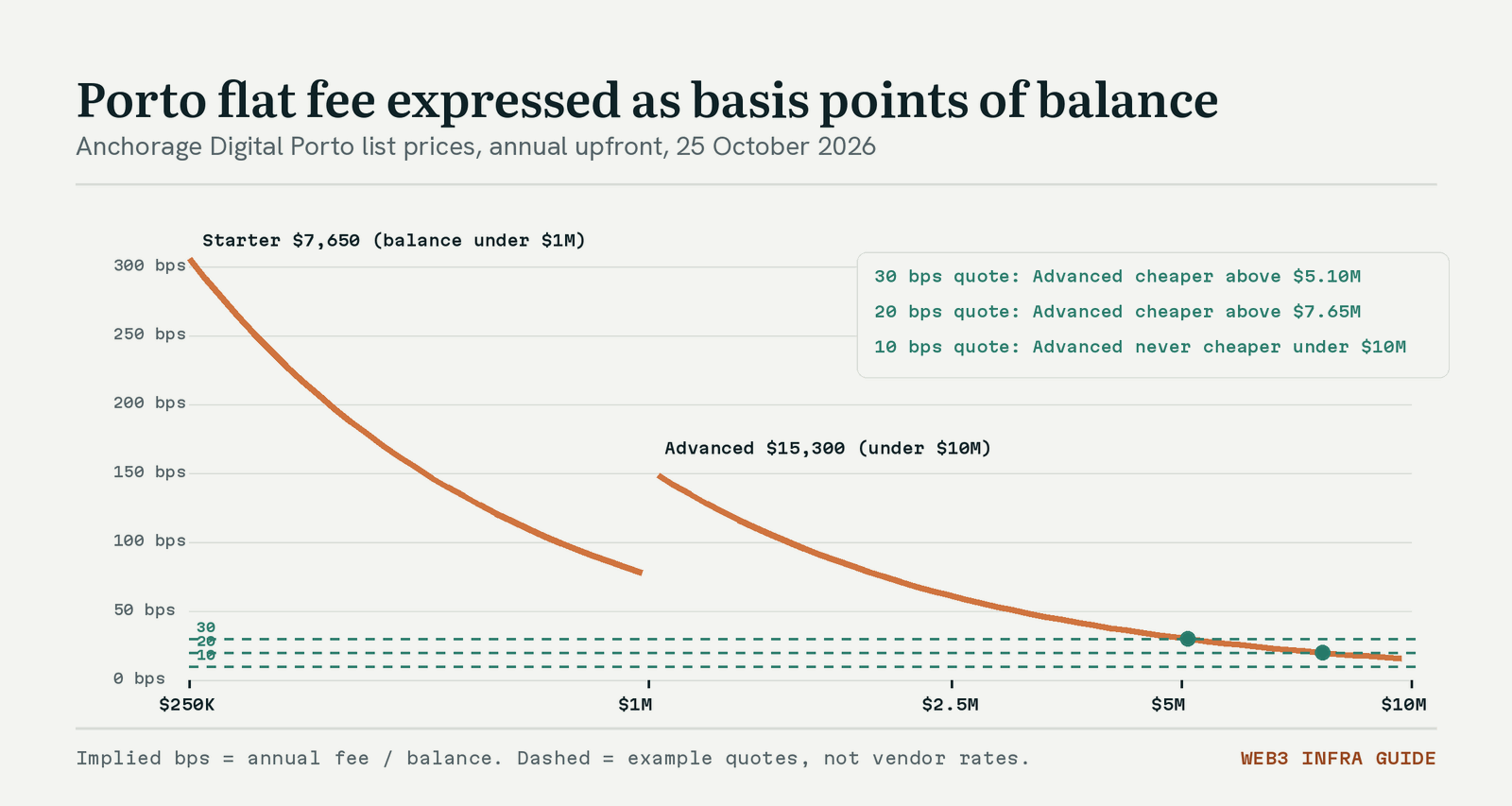
| Example custody quote | Annual cost at $2M | Annual cost at $5M | Annual cost at $9M | Porto Advanced is cheaper above |
|---|---|---|---|---|
| 10 bps | $2,000 | $5,000 | $9,000 | Never under $10M |
| 20 bps | $4,000 | $10,000 | $18,000 | $7.65M |
| 30 bps | $6,000 | $15,000 | $27,000 | $5.10M |
| Porto Advanced (flat) | $15,300 | $15,300 | $15,300 | n/a |
# Break-even balance between a flat fee and a basis-point quote
porto_advanced = 15_300            # $ a year, balance under $10M
for bps in (10, 20, 30):
    breakeven = porto_advanced / (bps / 10_000)
    print(bps, round(breakeven))     # 10: 15,300,000  20: 7,650,000  30: 5,100,000

# Porto Starter as implied bps at its $1M cap
print(7_650 / 1_000_000 * 10_000)   # 76.5 bps
The flat fee is expensive for small balances and cheap for large ones. Porto Starter at $7,650 a year is 76.5 bps on a $1M balance and 306 bps on $250K. To rerun the math, divide the flat fee by your balance and multiply by 10,000. Porto is self-custody, not bank custody, so compare it with BitGo self-custody or a BitGo hot wallet plan, not with assets held fully by BitGo Bank & Trust.
Year-One Software Cost When Leaving BitGo Self-Custody
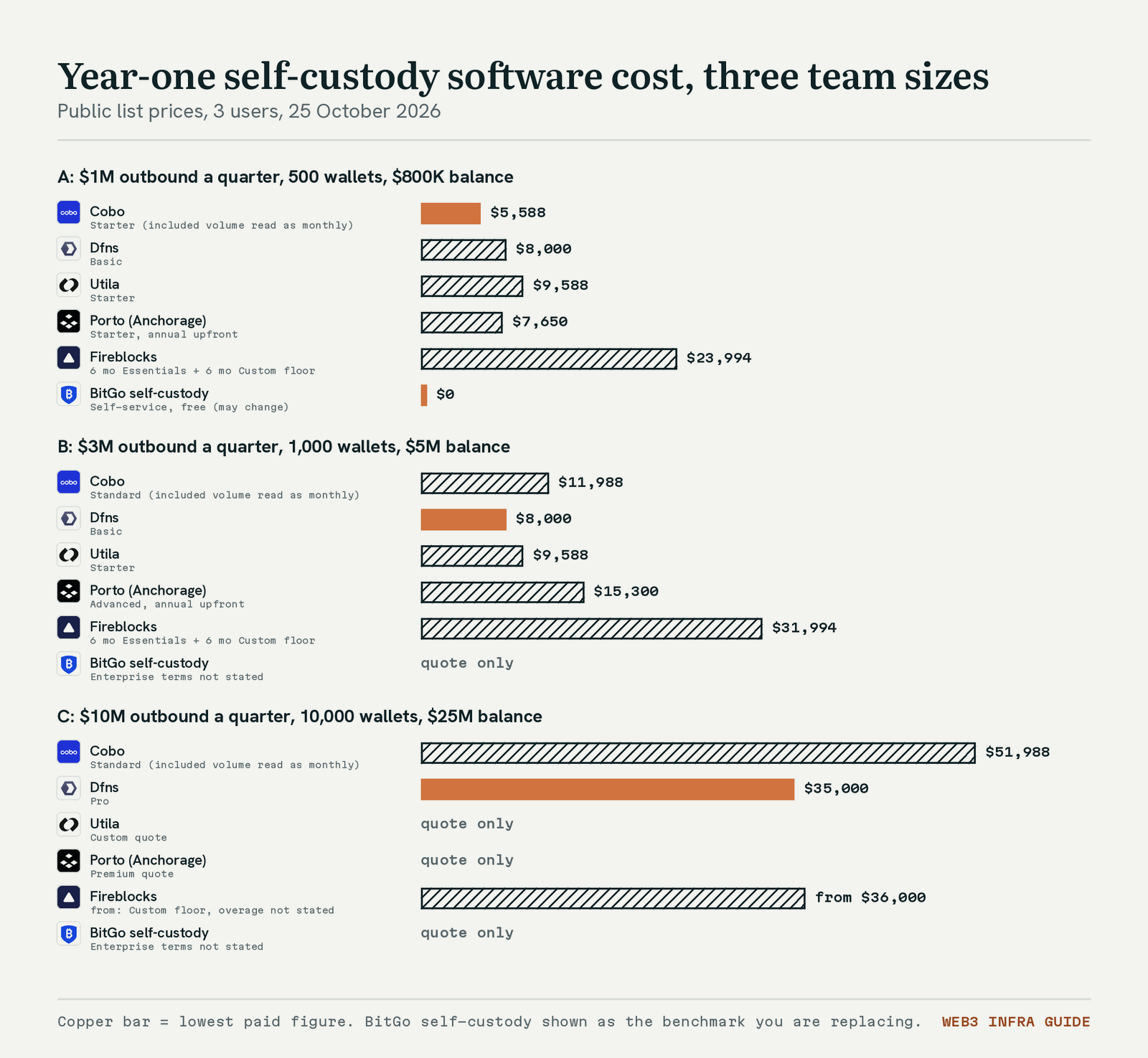
If you use BitGo’s free self-service wallets and need a paid policy engine, these are the year-one list prices for three teams, each with 3 users. Cobo is cheapest for the smallest team, Dfns Basic for the middle one, and Dfns Pro for the largest.
| Vendor | A: $1M a quarter, 500 wallets | B: $3M a quarter, 1,000 wallets | C: $10M a quarter, 10,000 wallets |
|---|---|---|---|
| $5,588 (Starter) | $11,988 (Standard) | $51,988 (Standard) |
| $8,000 (Basic) | $8,000 (Basic) | $35,000 (Pro) |
| $9,588 (Starter) | $9,588 (Starter) | Quote only (Custom quote) |
| $7,650 (Starter, annual upfront) | $15,300 (Advanced, annual upfront) | Quote only (Premium quote) |
| $23,994 (6 mo Essentials + 6 mo Custom floor) | $31,994 (6 mo Essentials + 6 mo Custom floor) | from $36,000 (from: Custom floor, overage not stated) |
| $0 (Self-service, free (may change)) | Quote only (Enterprise terms not stated) | Quote only (Enterprise terms not stated) |
Cobo Starter is $299 a month with $300K of outgoing volume, 2 users and 0.20% overage, and Standard is $999 a month with $1.25M, 5 users and 0.16% overage. Cobo does not say whether included volume is monthly, so we read it as monthly, which is the cheaper reading for you.
Dfns Basic is $8,000 a year for 10,000 wallets on 3 blockchains, and Pro is $35,000 for 50,000 wallets on all chains, with no volume fees. A multi-chain team in scenario A or B may need Pro. Fireblocks Essentials is $999 a month for up to 6 months with $1M of outbound volume a quarter and 0.20% overage, then Custom from $36,000 a year.
1. Anchorage Digital
- Audits: SOC 1 and SOC 2 Type II audited controls, with bankruptcy-remote, segregated custody.
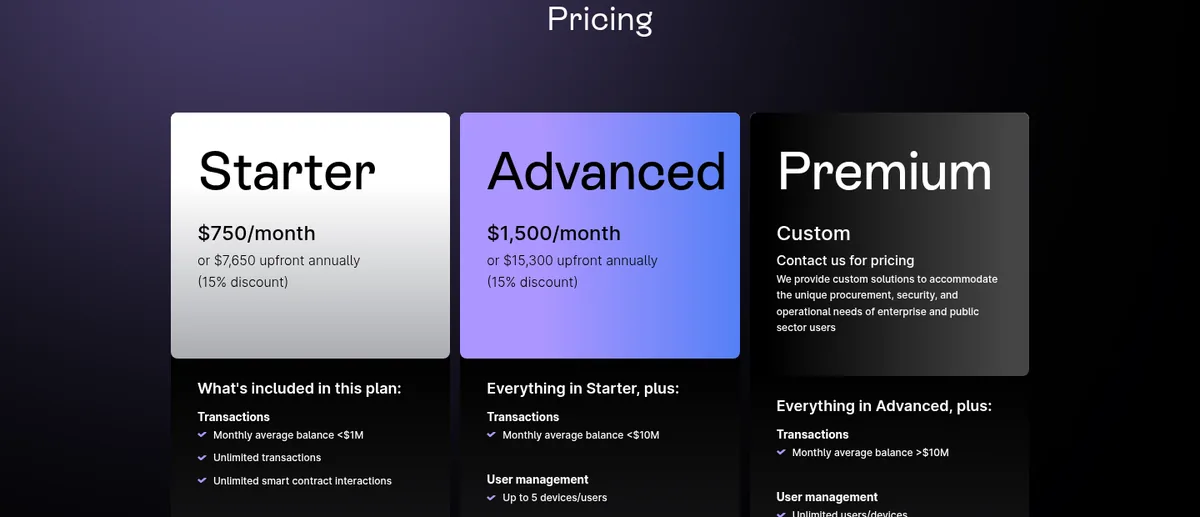
- Porto pricing: Starter $750 a month or $7,650 upfront for balances under $1M, Advanced $1,500 a month or $15,300 upfront under $10M, and Premium by quote, per its self-custody page.
- Security: HSM-backed keys and customisable quorum approvals for vaults, wallets and smart contract owner addresses.
- Weaknesses: no stated insurance amount and a smaller asset list than BitGo.
Verdict: Anchorage Digital scores 9.0 against BitGo’s 9.3. Choose it as a second custodian or a direct swap when a bank charter matters.
2. Fireblocks
- Essentials: $999 a month for up to 6 months, $1M of outbound volume a quarter, 0.20% overage and 5,000 embedded wallets, per its pricing page.
- Custom: from $36,000 a year, with cold wallets, raw signing, KeyLink and tokenization as add-ons, and Off Exchange from 3 to 30 bps on AUC.
- Audits: SOC 2 Type 2, ISO 27001 and CCSS QSP Level 3.
- Weaknesses: the Essentials plan ends after 6 months, and qualified custody needs a separate Fireblocks Trust Company agreement.
Verdict: Fireblocks scores 8.8. Pick it when you want MPC, a large counterparty network and exchange connectivity more than a bank charter.
3. Coinbase Prime
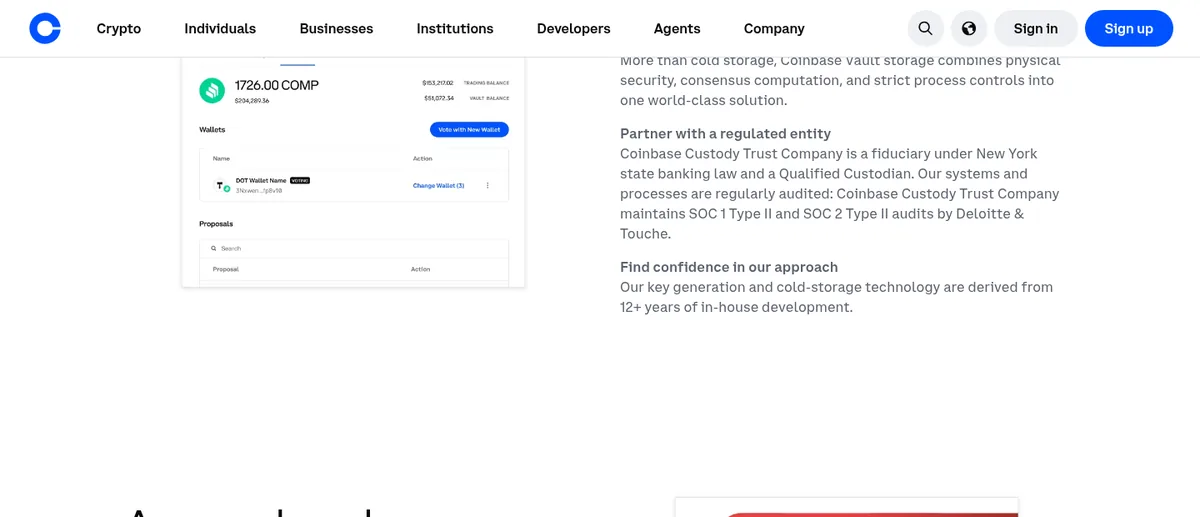
- Audits: SOC 1 Type II and SOC 2 Type II for Coinbase Custody Trust Company.
- Coverage: 470+ assets, with staking and governance voting without moving assets out of cold storage.
- Wallets: a non-custodial Prime Onchain Wallet with a policy engine for DeFi access, per its Prime page.
- Weaknesses: no public price, no stated insurance amount and a state rather than federal charter.
Verdict: Coinbase Prime scores 8.4. Choose it when trading liquidity matters as much as custody. Our BitGo vs Coinbase Prime vs Fidelity Digital Assets comparison puts it head to head with BitGo.
4. Cobo
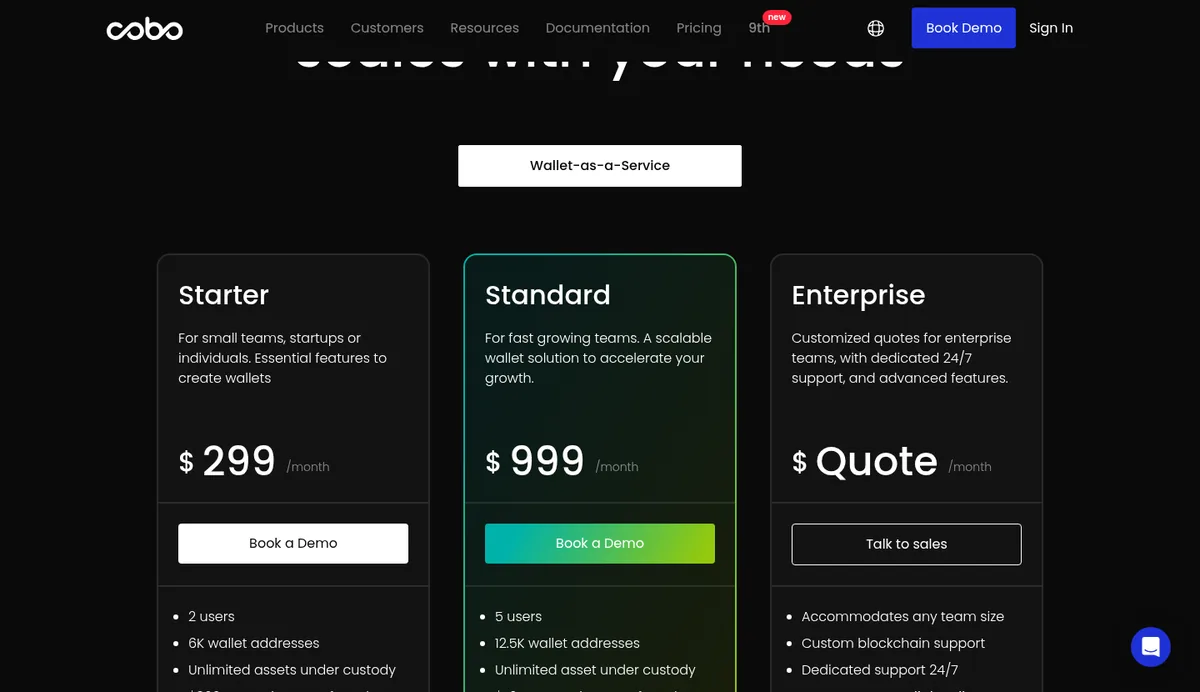
- Plans: Starter $299 a month with 2 users, 6,000 addresses and $300K of outgoing volume, Standard $999 a month with 5 users, 12,500 addresses and $1.25M, per its pricing page.
- Audits: SOC 2 Type II certified and ISO 27001 compliant.
- Coverage: 80+ chains and 3,000+ tokens, per its home page.
- Weaknesses: custodial wallets sit on the Enterprise plan only, and the included volume period is not stated.
Verdict: Cobo scores 8.3. Pick it for a small team that wants MPC and exchange wallets with a public price.
5. Dfns
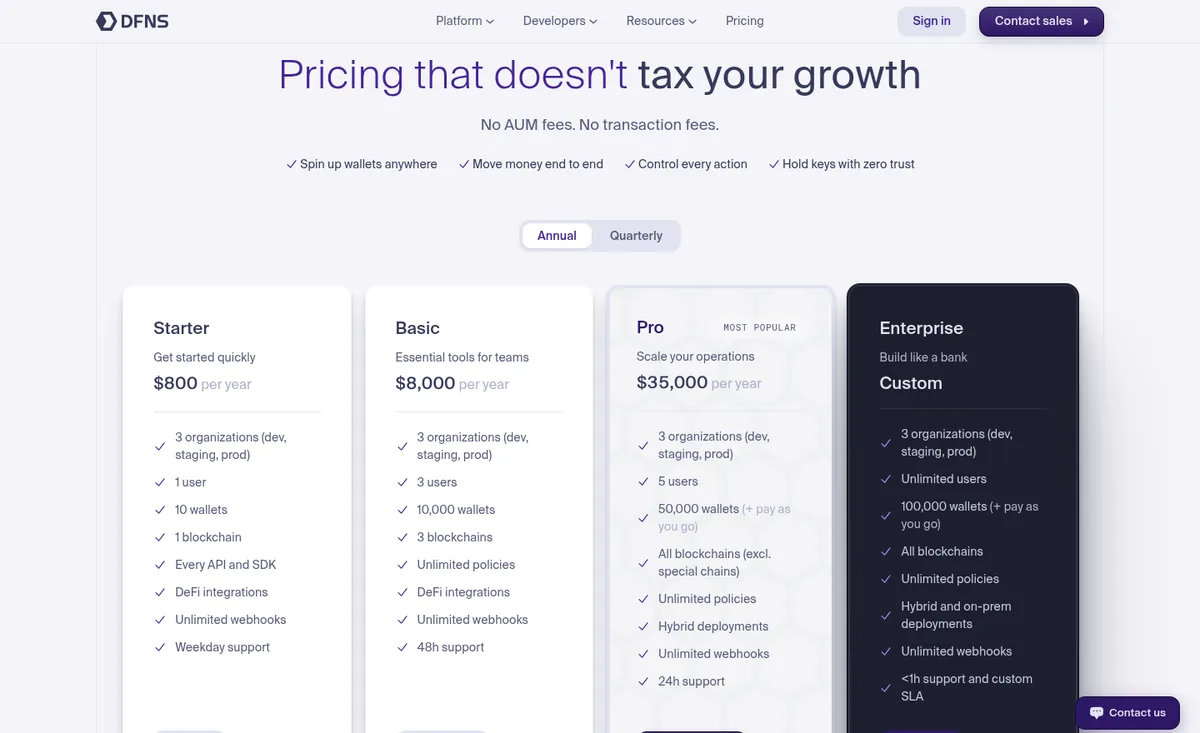
- Plans: Starter $800, Basic $8,000 for 10,000 wallets on 3 blockchains, Pro $35,000 for 50,000 wallets on all chains, and Enterprise custom, all yearly, per its pricing page.
- Audits: SOC 2 Type II by Deloitte plus ISO 27001, 27017 and 27018, with crime, E&O and cyber cover, per its security page.
- Coverage: 100+ blockchains.
- Weaknesses: no licence and no stated insurance limit, so pair it with a custodian if you need qualified custody.
Verdict: Dfns scores 8.2. Choose it when you run many wallets or high volume and want a flat price.
6. Copper
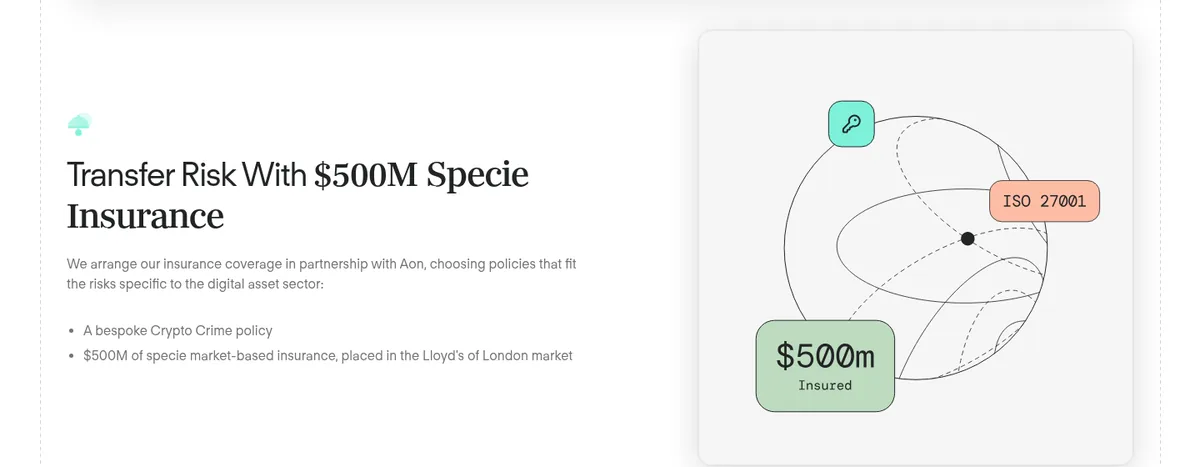
- Insurance: $500M of specie insurance placed in the Lloyd’s of London market through Aon, per its security page.
- Audits: SOC 2 Type 2 and ISO 27001.
- Entity: Copper Markets (US), Inc. is an SEC registered broker-dealer and FINRA member.
- Weaknesses: no public price and no supported asset count on the pages we read.
Verdict: Copper scores 7.2. Pick it when off-exchange settlement and a large insurance limit matter most.
7. Fordefi
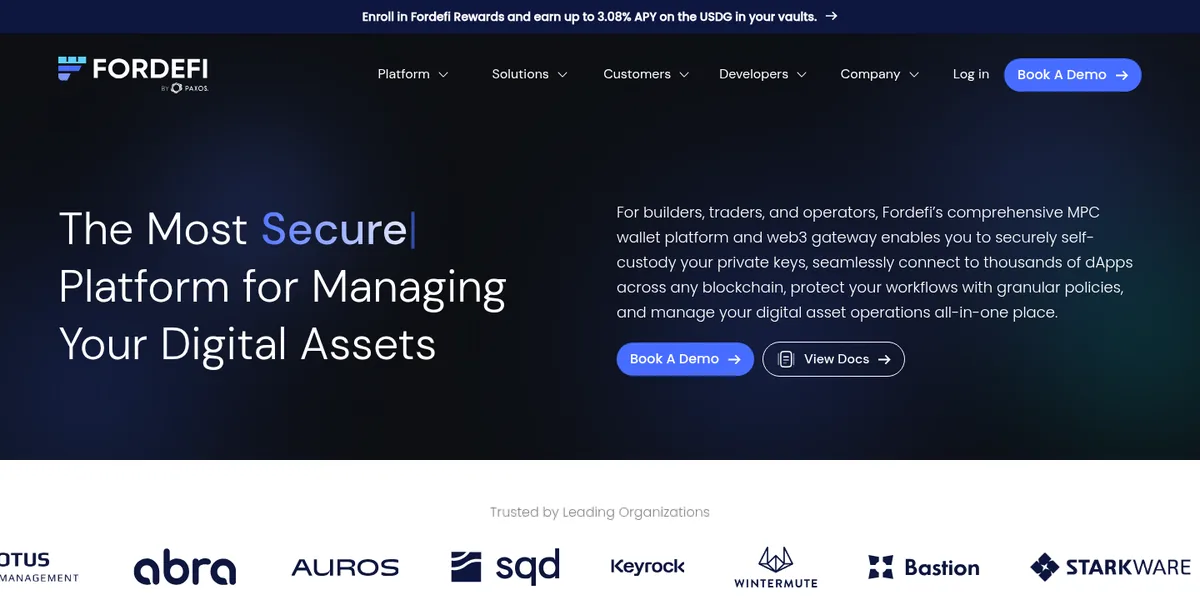
- Security: MPC key shares split between Fordefi and the customer, SOC 2 Type II by EY and penetration testing, per its product security docs.
- Chains: EVM, SVM, Cosmos, UTXO, Sui, Aptos, TON, Starknet, Stacks, TRON and Stellar networks, per its supported blockchains list.
- Custody: qualified custody integration with Paxos Trust Company.
- Weaknesses: no public price and no ISO 27001 or insurance named.
Verdict: Fordefi scores 7.1. Choose it when dApp policy controls matter more than a published price.
8. Utila
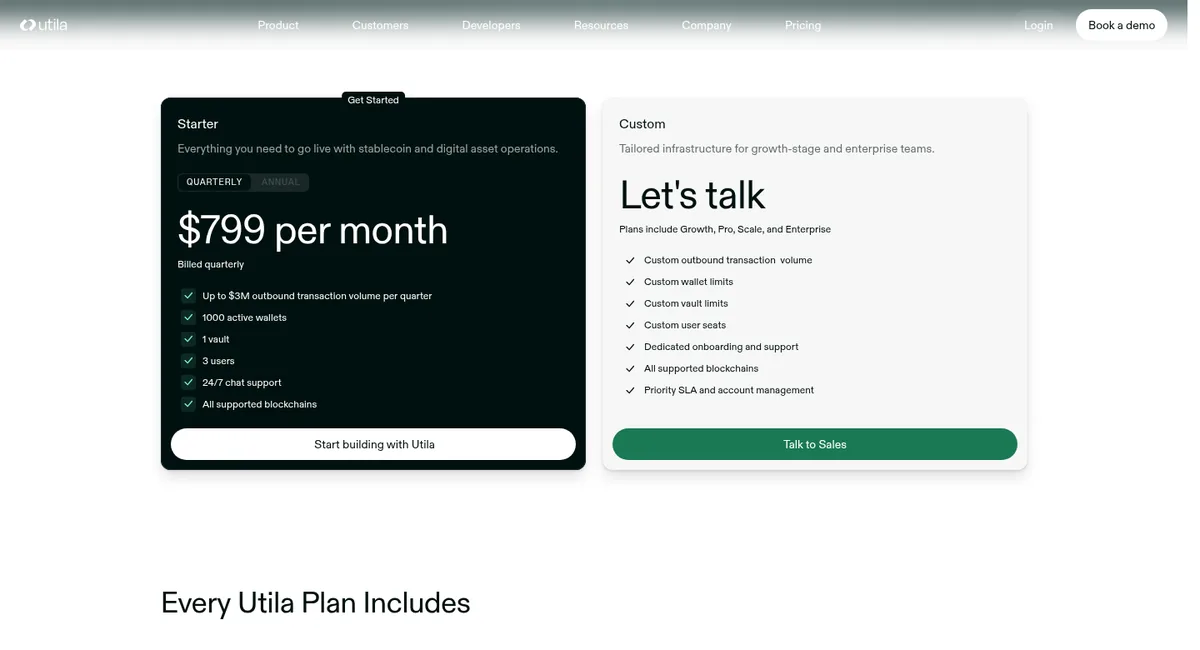
- Plan: Starter $799 a month for 12 months, billed quarterly, with 1,000 active wallets and all supported blockchains, per its pricing page. Higher plans are custom.
- Audits: SOC 2 Type II and infrastructure audits by Halborn, per its security page.
- Coverage: EVM and non-EVM blockchains from one platform, per its home page.
- Weaknesses: no licence, no ISO 27001 or insurance named, and no overage terms above the Starter cap.
Verdict: Utila scores 6.7. Pick it for stablecoin payment and treasury teams that want a flat monthly fee. Our crypto treasury management platforms guide compares it with other tools built for finance teams.
BitGo Itself, as the Benchmark
BitGo scores 9.3, the highest of any vendor on our custody rubric. If BitGo works for you today, the strongest reason to add an alternative is concentration risk, not capability.
- Licences: BitGo Bank & Trust, N.A. under the OCC, BitGo New York Trust Company under NYDFS, plus entities under Dubai VARA, MiCAR via BaFin and VQF in Switzerland, per its licences page.
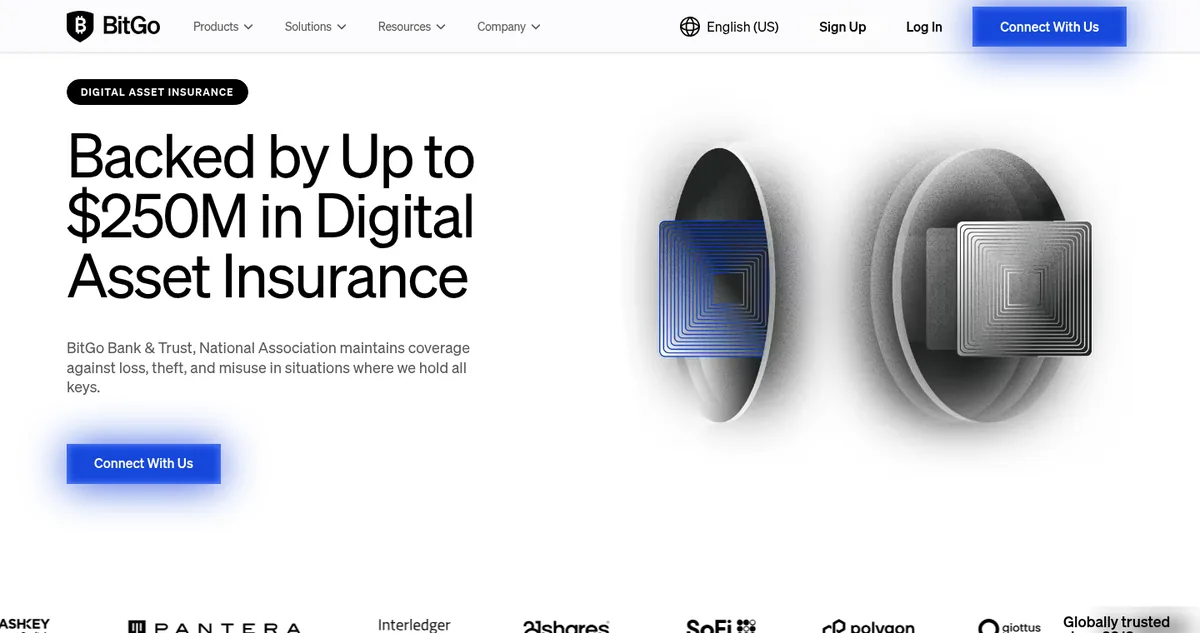
- Insurance: a $250M policy for assets where BitGo Bank & Trust holds all keys, through a Lloyd’s of London and European syndicate, with excess specie cover available through its broker, per its insurance page.
- Before you switch: ask BitGo for its AUC and transaction rates in writing, then compare them with the break-even table above. Our institutional custodians hub and MPC wallets and key management hub cover the wider market.
Which Alternatives We Left Out
We left out Fidelity Digital Assets, Paxos, Komainu and Zodia Custody from this ranking because their pages gave too little price or audit detail to score on the same basis on 25 October 2026. Safeheron is also left out because its site returned an access error when we checked. Consumer multisig wallets are out of scope because they lack institutional policy engines and audit reports.
Final Ranking
Anchorage Digital leads because it replaces BitGo with another chartered custodian. Fireblocks is the main MPC alternative and Coinbase Prime adds the deepest trading stack. Cobo and Dfns publish full price lists, while Copper, Fordefi and Utila each win a narrower use case.








Verdict: Shortlist Anchorage Digital or Coinbase Prime if you need another custodian, Fireblocks if you are moving to MPC, and Cobo or Dfns if you want a public price list.
Frequently Asked Questions
What is the best BitGo alternative?
Anchorage Digital scores highest at 9.0 against 9.3 for BitGo. It runs Anchorage Digital Bank N.A., an OCC chartered bank, reports SOC 1 and SOC 2 Type II controls and publishes Porto self-custody pricing from $750 a month. Fireblocks scores 8.8 and is the main MPC alternative.
Who are BitGo’s main competitors?
BitGo competes with qualified custodians such as Anchorage Digital, Coinbase Prime and Copper, and with wallet infrastructure vendors such as Fireblocks, Cobo, Dfns, Fordefi and Utila. The custodians hold assets under a charter or licence, while the wallet vendors leave key control with your own team.
How does BitGo charge for custody?
BitGo bills custody in basis points on the average USD balance of assets under custody, computed from hourly balances, and bills outgoing sends in basis points by tier for each asset. Its billing page explains the method but does not list rates, so you need a quote to compare it.
Is Anchorage Digital cheaper than BitGo?
For self-custody, Anchorage Digital publishes Porto at $7,650 a year for balances under $1M and $15,300 under $10M, while BitGo self-service wallets are free. For bank custody neither publishes a rate. Porto Advanced beats a 30 bps quote above a $5.1M balance.
Which BitGo alternatives are qualified custodians?
Anchorage Digital Bank N.A. is an OCC chartered bank and Coinbase Custody Trust Company is a New York fiduciary and qualified custodian. Fireblocks offers custody through its separate Fireblocks Trust Company and Fordefi integrates Paxos Trust Company. Cobo, Dfns and Utila are software platforms.
Which BitGo alternatives state insurance amounts?
Only Copper states a figure: $500M of specie insurance placed in the Lloyd’s of London market through Aon, against BitGo’s up to $250M for assets where BitGo Bank and Trust holds all keys. Dfns names crime, E&O and cyber cover with no limit, as checked on 25 October 2026.